
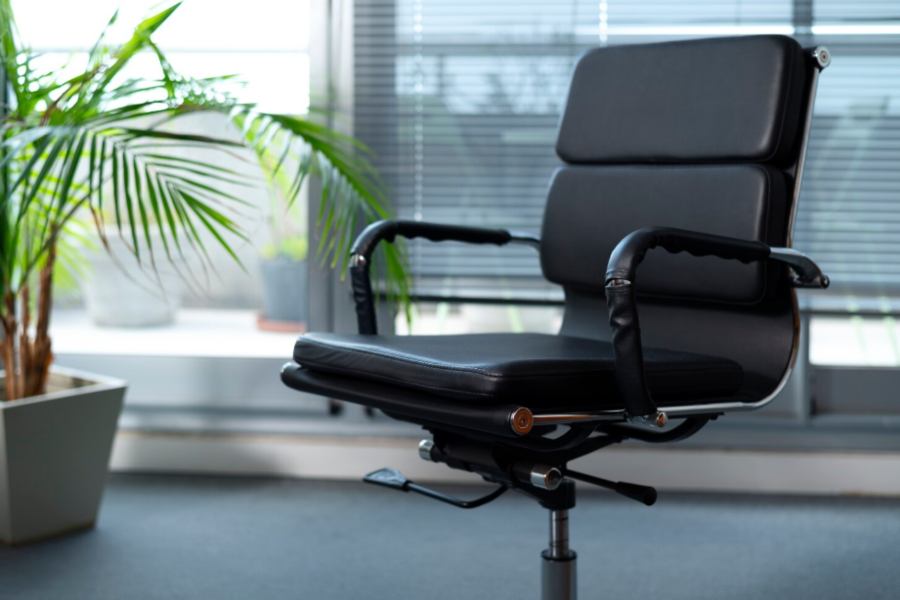
Most of us spend forty hours or more a week parked in an office chair without giving it a second thought. We assume that as long as it has four wheels and a seat, we are good to go. However, a failing chair is more than just an annoyance; it is a genuine safety hazard that can lead to sudden falls or chronic back strain. If you have been injured due to faulty equipment at work, seeking advice from the Aaron Allison Law Firm can help you understand your rights regarding workplace safety. Taking a moment to inspect your gear now could save you from a nasty surprise later.
1. The Chair Wobbles Or Leans To One Side
When you sit down, your chair should feel like a solid foundation. If you notice that you are constantly shifting your weight to compensate for a tilt, or if the seat pan feels like it is floating on a loose hinge, you have a problem. This side-to-side instability usually means the mounting plate beneath the seat has cracked, or the bolts have stripped from the frame.
A wobbling chair forces your muscles to stay “on” all day just to keep you upright. This leads to hip misalignment and lower back fatigue. Worse yet, if that lean is caused by a structural fracture in the metal, it is only a matter of time before the seat snaps off the gas cylinder entirely. If you feel like you are sitting on a see-saw rather than a workstation, it is time to retire the chair before it tips you onto the floor.
2. The Height Will Not Stay Locked In Place
We have all experienced that slow, sinking feeling where you start the morning at the perfect desk height and end up with your chin resting on the keyboard by lunch. This happens because the pneumatic cylinder (the pressurized chamber that controls the height) has a slow leak. While a “sinking chair” feels like a minor comedy bit, it actually poses a risk to your long-term ergonomics.
When the height will not stay locked, you lose the ability to keep your feet flat on the ground and your elbows at a ninety-degree angle. This puts immense pressure on your wrists and shoulders. Furthermore, a cylinder that can no longer hold air pressure is a sign of internal seal failure. In rare cases, these pressurized components can fail catastrophically. If your chair refuses to stay at the height you set, the internal mechanism is spent, and no amount of DIY tightening will fix a blown seal.
3. The Wheels Or Base Do Not Move Smoothly
The wheels, or casters, are often the most neglected part of office furniture. We roll over grit, hair, and carpet fibers until the bearings are completely choked. When wheels seize up, you stop rolling and start “skidding.” This creates a trip hazard because the chair might not move when you expect it to, or it might jerk suddenly when you try to stand up, causing the base to fly out from under you.
Check the five-star base for any hairline cracks in the plastic or metal as well. The base bears the entirety of your body weight. If a single leg of that base is compromised, the center of gravity shifts. A wheel that sticks can cause the whole unit to flip over if you lean too far forward to reach for a phone or a stapler. If you find yourself fighting the chair just to move six inches, the structural integrity of the wheelbase is likely compromised.
Final Word
Your office chair is the most important tool in your professional environment, and it deserves a regular safety check. Ignoring these mechanical red flags can lead to preventable accidents that disrupt your life and your livelihood. If a workplace injury has already occurred due to neglected equipment, the Aaron Allison Law Firm is available to help you navigate the legal aftermath. Do not wait for a total collapse to happen; replace a shaky chair today so you can stay focused and upright.